GHK is a tripeptide that coordinates copper(II) through nitrogen donor sites, creating a metal-peptide complex with properties different from unbound peptide or free copper. Binding studies examine stoichiometry, affinity, competing ligands, pH dependence, and exchange kinetics.
Batch tested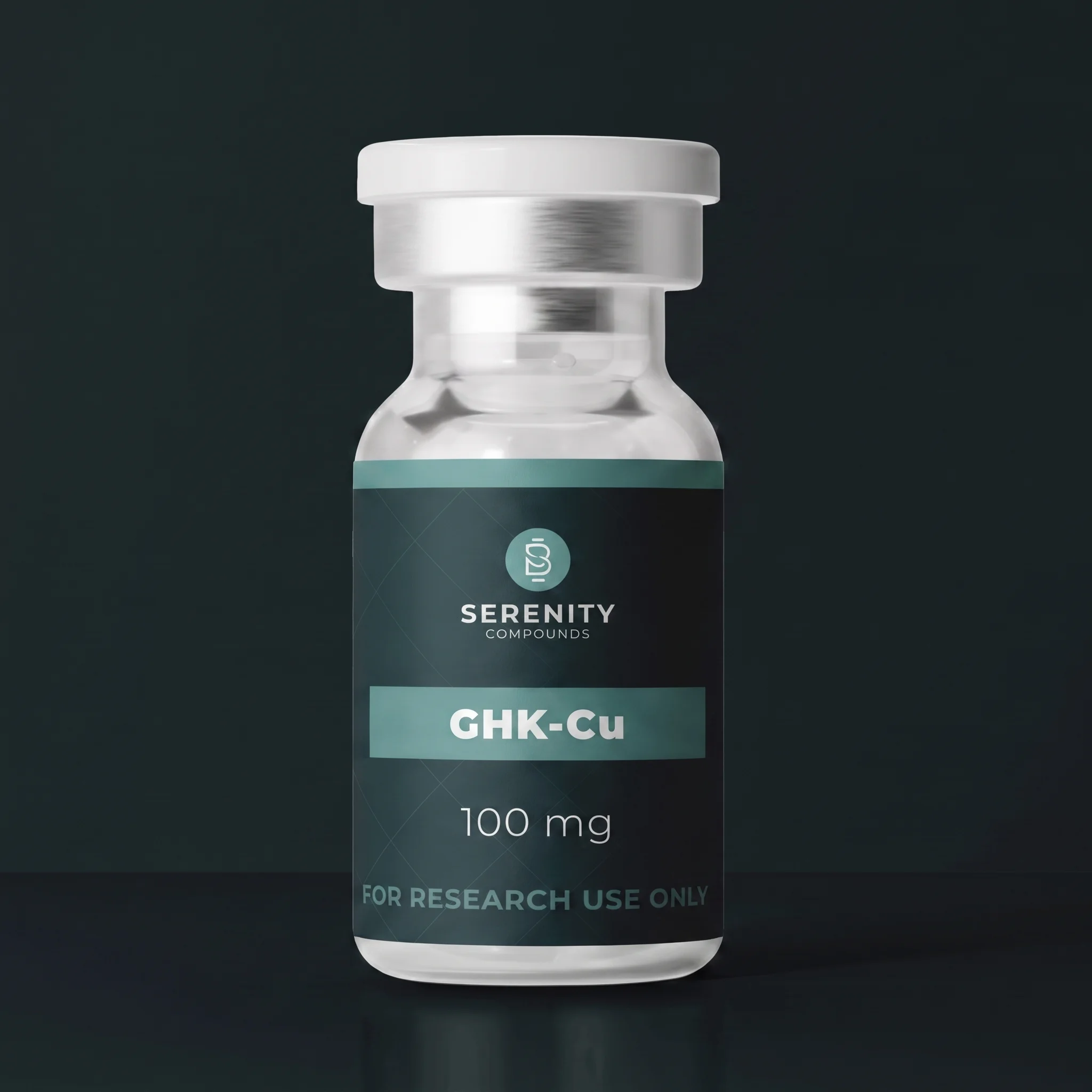
Representative product imagery. Verify the physical label and lot documentation on receipt.
Tissue Research
GHK-Cu
In stock·Ships in 1–2 business days
GHK-Cu copper peptide available in 50 mg and 100 mg sizes. Each unit is labeled with a traceable lot code and links to its corresponding analytical report.
Select size2 options
Select pack sizeSave 18% on kits
Peptide$41.99
51 ready to shipTransparent volume pricing10-vial peptide kits save 18%.
Batch tested COA available Secure checkout US & EU dispatch
Compound context
What researchers study
GHK-Cu is a copper-binding peptide complex studied in laboratory models involving extracellular matrix signaling and analytical metal-peptide interactions.
Tissue-model research uses controlled cell cultures, matrices, and biochemical assays to examine signaling associated with extracellular structure, migration, and laboratory injury models.
Laboratory tissue models simplify complex biology. They are useful for mechanism and method research but do not demonstrate healing, treatment, or clinical performance.
Scope limitThe presence of copper can affect analytical methods; consult the batch report and laboratory SOP.
Serenity Compounds is not a compounding pharmacy or chemical compounding facility as defined under Section 503A of the Federal Food, Drug, and Cosmetic Act.
Common laboratory focus
In controlled cell and matrix models, researchers study signaling associated with extracellular-matrix turnover, metalloproteinases, redox balance, migration, and gene expression. These models investigate mechanisms and cannot establish cosmetic, wound-healing, or therapeutic outcomes.
UV-visible spectroscopy, mass spectrometry, chromatography, and elemental methods can be combined to characterize both peptide and copper content. Copper can alter ionization and detector response, so matrix-matched controls and batch-specific methods are important.
Quality documentation
Know what your laboratory receives.
Batch records are published for transparency and should be independently reviewed by qualified research personnel.
Current certificateGHK-Cu · Lot SC-2607Identity confirmed · Purity report availableView report
- Tamper-evident packaging
- Lot and SKU traceability
- Independent analytical review
Continue exploring