GLP-3 research material is studied as a multi-agonist in assays involving GLP-1, GIP, and glucagon receptor pathways—the same research class commonly discussed under Retatrutide search language. Researchers compare binding and second-messenger responses at each receptor to understand relative potency, bias, and pathway interaction in controlled models.
Batch tested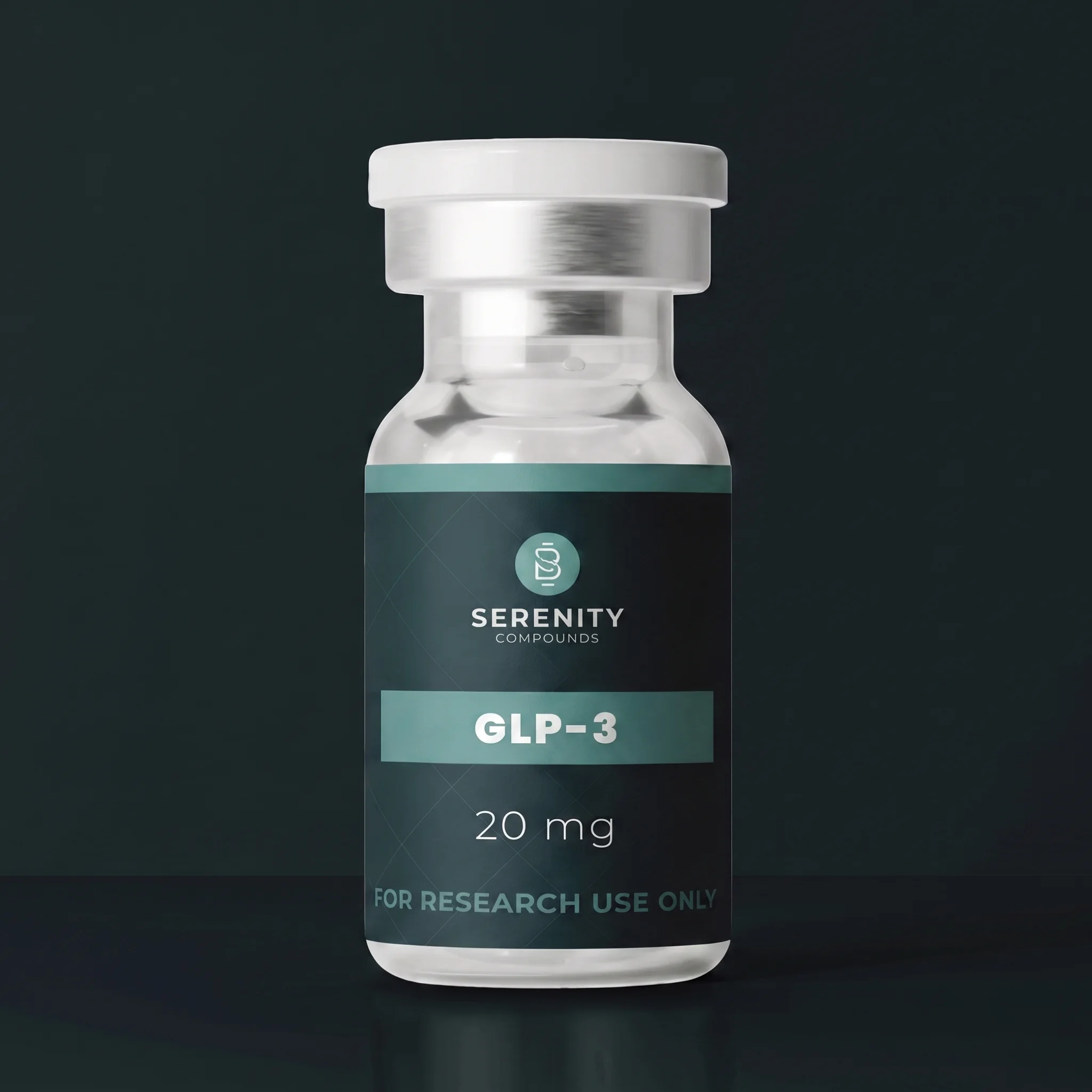
Representative product imagery. Verify the physical label and lot documentation on receipt.
Metabolic Research
GLP-3
In stock·Ships in 1–2 business days
Researchers seeking Retatrutide can view this GLP-3 research offering for current availability and lot documentation.
GLP-3 peptide offered in 10 mg and 20 mg sizes with batch-level documentation. Each unit is labeled with a traceable lot code and links to its corresponding analytical report.
Select size2 options
Select pack sizeSave 18% on kits
Peptide$103.99
43 ready to shipTransparent volume pricing10-vial peptide kits save 18%.
Batch tested COA available Secure checkout US & EU dispatch
Compound context
What researchers study
GLP-3 is our product designation for a multi-agonist research peptide used in controlled receptor-signaling and analytical characterization studies. Researchers seeking Retatrutide can view this GLP-3 research offering for documented laboratory material.
Metabolic research examines how cells sense nutrients, exchange chemical signals, regulate energy pathways, and respond to controlled experimental conditions. Reference compounds are used to isolate particular pathways in validated assay systems.
Results depend on model selection, concentration range, controls, assay design, and analytical method. Findings from a cell or biochemical model cannot be treated as evidence of an outcome in people or animals.
Scope limitResearch descriptions are not claims of therapeutic effect.
Serenity Compounds is not a compounding pharmacy or chemical compounding facility as defined under Section 503A of the Federal Food, Drug, and Cosmetic Act.
Common laboratory focus
Identity testing evaluates intact molecular mass, expected peptide-related modifications, chromatographic purity, and sequence-informative fragments. Complex engineered peptides may require multiple orthogonal methods to distinguish closely related impurities.
Comparative studies examine the same qualified lot across receptor panels, analytical platforms, concentrations, and time points. Laboratory receptor activity does not establish weight-loss, metabolic, safety, or clinical outcomes.
Quality documentation
Know what your laboratory receives.
Batch records are published for transparency and should be independently reviewed by qualified research personnel.
Current certificateGLP-3 · Lot SC-2607Identity confirmed · Purity report availableView report
- Tamper-evident packaging
- Lot and SKU traceability
- Independent analytical review
Continue exploring