Semax is a synthetic ACTH(4-7)-related heptapeptide investigated in controlled models of neurotrophin-associated signaling, melanocortin-related pathways, and cellular stress response. Results are highly dependent on model, exposure, controls, and measured endpoint.
Batch tested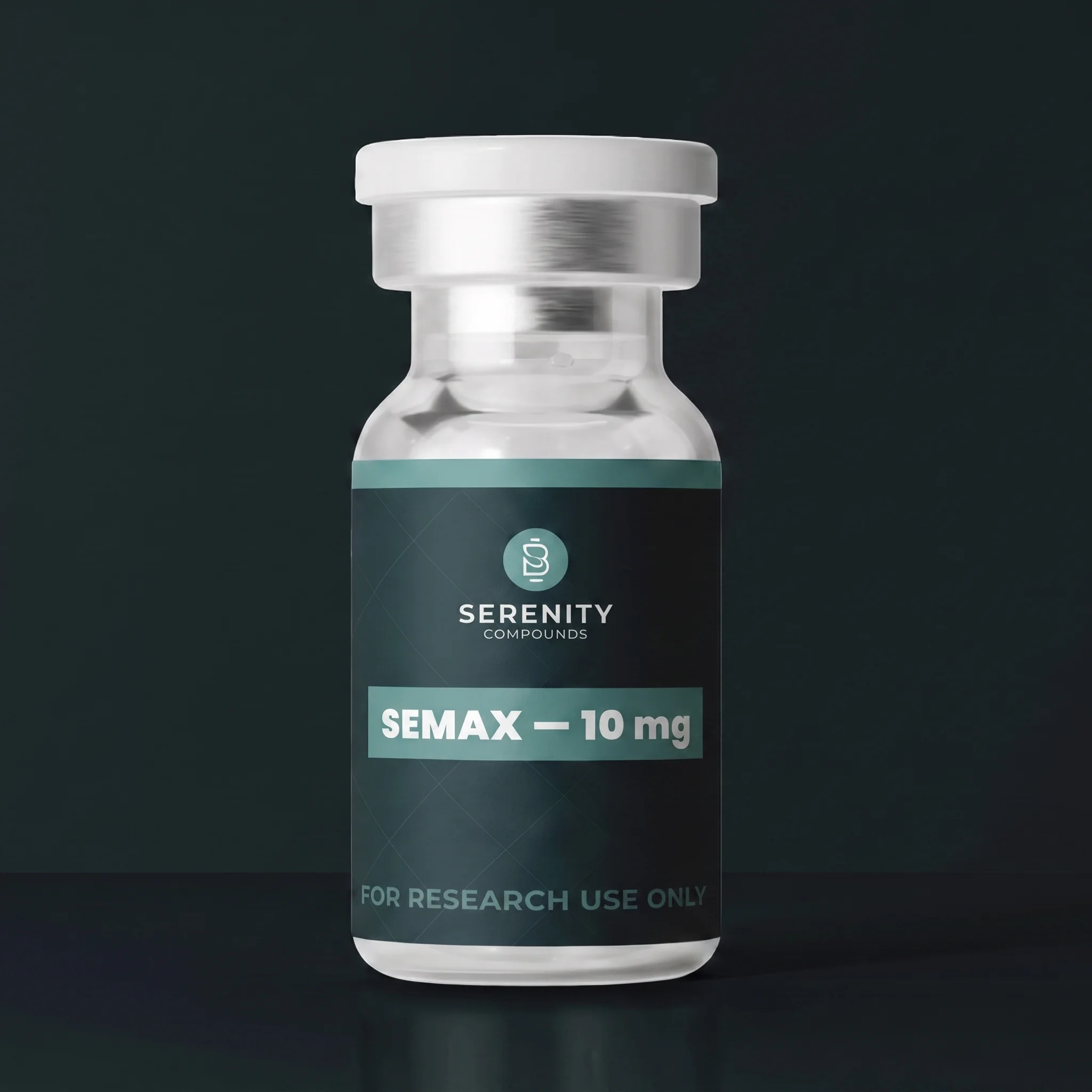
Representative product imagery. Verify the physical label and lot documentation on receipt.
Neuro Research
Semax
In stock·Ships in 1–2 business days
Semax peptide supplied in a 10 mg research vial with clear batch records. Each unit is labeled with a traceable lot code and links to its corresponding analytical report.
Select size1 option
Select pack sizeSave 18% on kits
Peptide$41.99
34 ready to shipTransparent volume pricing10-vial peptide kits save 18%.
Batch tested COA available Secure checkout US & EU dispatch
Compound context
What researchers study
Semax is a synthetic peptide reference material used in controlled neuro-signaling and sequence-stability research.
Neuro-signaling research investigates receptors, cellular communication, peptide stability, and analytical behavior in qualified in-vitro and biochemical models.
In-vitro neuro-signaling observations cannot be translated into cognitive, behavioral, psychiatric, or therapeutic claims. Appropriate controls and independent replication remain essential.
Scope limitNo diagnostic, treatment, or human-use inference should be made from analytical data.
Serenity Compounds is not a compounding pharmacy or chemical compounding facility as defined under Section 503A of the Federal Food, Drug, and Cosmetic Act.
Common laboratory focus
Stability studies characterize enzymatic and nonenzymatic cleavage, oxidation, adsorption, and temperature-dependent loss. Laboratories should report both intact peptide recovery and the appearance of identifiable degradants.
Analytical methods combine chromatography, mass spectrometry, and qualified controls to establish selectivity and sensitivity in the intended matrix. Experimental signaling findings cannot be translated into claims about cognition, stroke, mood, or treatment.
Quality documentation
Know what your laboratory receives.
Batch records are published for transparency and should be independently reviewed by qualified research personnel.
Current certificateSemax · Lot SC-2607Identity confirmed · Purity report availableView report
- Tamper-evident packaging
- Lot and SKU traceability
- Independent analytical review
Continue exploring